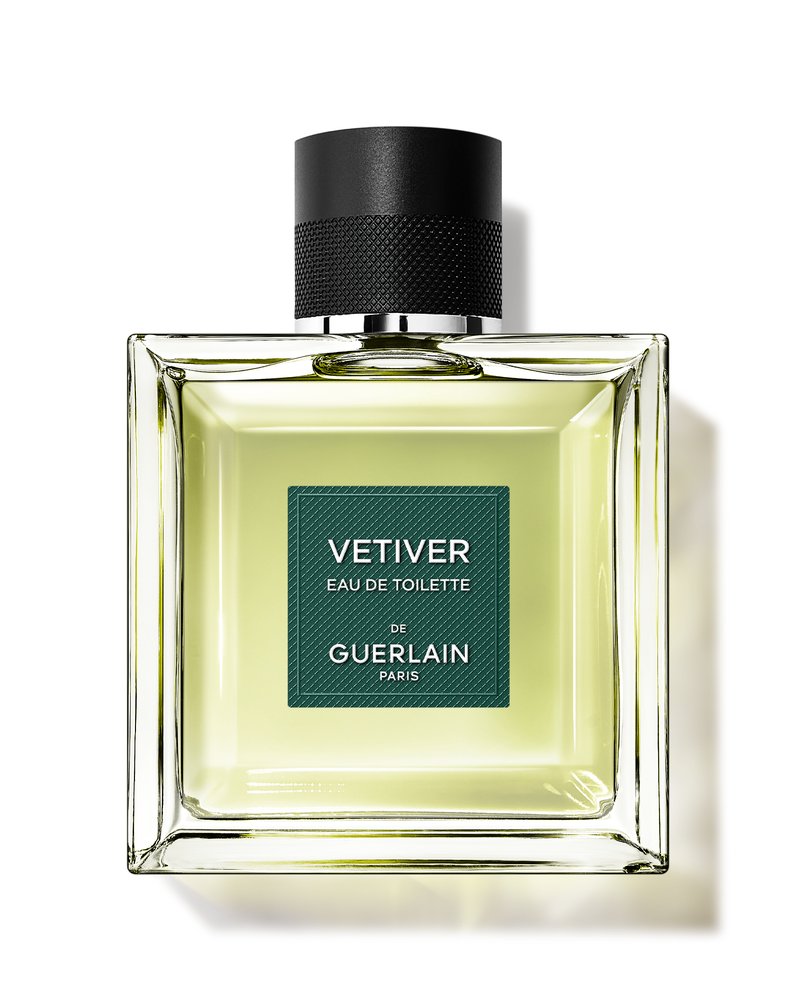
Quick answers
Year and family
1959 · Woody vetiver
Olfactory signature
The composition of Vétiver articulates three registers that had rarely been combined with this level of restraint before its release: a citrus brightness in the top, a clean vetiver in the heart and a warm tonka and cedar drydown in the base. The opening sparkles on bergamot and lemon, supported by…
Perfumer
Jean-Paul Guerlain
History
Vétiver was launched in 1959 by Guerlain, the Parisian perfume house founded in 1828, and composed by Jean-Paul Guerlain, fourth-generation perfumer of the family. The release was his first major signature for the house, conceived in his early twenties under the mentorship of his father Jacques Guerlain.
The brief was masculine and classical, anchored in the imagery of a freshly turned earth after rain and the clean trace of a starched shirt. Jean-Paul Guerlain reworked the family's earlier Extrait de Vétiver, archived in the in-house catalogue since the nineteenth century, into a contemporary composition organized around Haitian vetiver. The release sat in dialogue with Vetyver by Carven (1957), among the very few French vetiver compositions on the market at the time.
The technical signature rested on the choice of vetiver. Haitian vetiver, harvested from the mountainous regions of Haiti, is widely reported as the cleanest and most ethereal of the major vetiver sources, sharper than Javanese vetiver and less smoky than Bourbon. Jean-Paul Guerlain layered it onto a top of bergamot, lemon and neroli, a heart of tobacco and pepper, and a drydown of cedar, tonka bean and musk, building a structure that defined the modern reading of the material.
Commercial reception was lasting. Vétiver became one of the major masculine signatures of French perfumery in the second half of the twentieth century and remained continuously in production. Jean-Paul Guerlain reworked the formula in 2000 to align with contemporary IFRA standards and released a feminine variant, Vétiver pour Elle, the same year. The composition is still actively sold across Eau de Toilette and Parfum concentrations in 2026.
Jean-Paul Guerlain, born in 1937, stands as the fourth generation of the Guerlain family to compose in-house, after his great-grandfather Pierre-François Pascal, his great-uncle Aimé and his grandfather Jacques. His catalogue includes Vétiver (1959), Habit Rouge (1965), Chamade (1969), Nahéma (1979), Samsara (1989) and L'Instant de Guerlain (2003). Thierry Wasser succeeded him as in-house perfumer in 2008, the first perfumer outside the family to hold the position. The olfactory pyramid and profile below describe the version sold today, reformulated for IFRA compliance; the 1959 original is recounted in the Story section above.
Olfactory pyramid
The pyramid below reflects the version currently on the market, reformulated from the 1990s for IFRA compliance; the 1959 original is described in the Story section above. The architecture of Vétiver is the textbook case of the modern masculine vetiver. A bright citrus opening yields to a Haitian vetiver heart braced by tobacco and warm spice, then to a drydown of tonka, cedar and musk. Notes documented on the official Guerlain product page.
Top
Bergamot, lemonstructural citrus opening
Nerolilight citrus floral bridge
Heart
Haitian vetiverthe central material, clean and earthy
Tobacco, nutmeg, pepperwarm spicy support
Base
Cedar, tonka beandry woody and warm balsamic drydown
Musksoft animalic close
Evolution on skin is progressive. The citrus opening fronts the first thirty minutes. The vetiver and tobacco heart then settles for several hours, gaining warmth as the tonka and cedar drydown develops. The full arc can persist beyond ten hours on skin, and the textile trace holds longer still. This pyramid set the very template that later masculine vetiver compositions would build upon.
Composition
The composition of Vétiver articulates three registers that had rarely been combined with this level of restraint before its release: a citrus brightness in the top, a clean vetiver in the heart and a warm tonka and cedar drydown in the base. The opening sparkles on bergamot and lemon, supported by a discreet neroli that softens the citrus angle. The transition to the Haitian vetiver unfolds within the first hour, with tobacco and a measured spice palette of nutmeg and pepper holding the heart through several hours.
The distinctive signature rests on the choice of Haitian vetiver as the central material in a period when vetiver compositions were rare on the French market. Jean-Paul Guerlain treated the material as a subject rather than a support, giving it the room to articulate its full earthy and slightly smoky profile, then anchored it with tonka and cedar. The drydown remains one of the most recognizable in classical masculine perfumery, warm but never heavy, persistent but never demonstrative.
The character that results is sober and classical. Sober, because the composition refuses every excess of sweetness, fruit or floral demonstration that defined the masculine market of the late 1950s. Classical, because it rests on a top to heart to base architecture of textbook precision and a material palette that has not aged. Several major masculine vetiver compositions sit in direct descent, from Vetiver by Givenchy (1959, released the same year) to Vetiver Extraordinaire by Frédéric Malle (2002) and Vétiver Tonka by Hermès (2004).
Jean-Paul Guerlain's Vétiver is the benchmark by which every modern masculine vetiver is measured, an exercise in clean classicism that has not lost a degree of its authority in sixty years.
Key characteristics
Family
Woody vetiver, founding modern masculine composition within French perfumery
Typical longevity
8 to 10 hours on skin, longer on textiles
Sillage
Moderate to important through the first hours, refined personal trace at the drydown
Audience
Marketed masculine by Guerlain since 1959; feminine variantVétiver pour Elle released in 2000
Cultural legacy
Vétiver founded the modern masculine vetiver lineage in French perfumery. When Jean-Paul Guerlain released it in 1959, vetiver was a familiar raw material for soap and aftershave compositions, but rarely the subject of a haute parfumerie men's fragrance. The release established a structural template that would shape the masculine vetiver category for the rest of the twentieth century and into the twenty-first.
The lineage runs through several major compositions. Vetiver Extraordinaire by Frédéric Malle (2002), composed by Dominique Ropion, pushes the Haitian vetiver concentration to an unprecedented level and explicitly references the Guerlain template as its starting point. Vétiver Tonka by Hermès (2004), composed by Jean-Claude Ellena for the Hermessences collection, reads the Guerlain pairing of vetiver and tonka through the lighter watercolor approach of contemporary niche perfumery. Sycomore by Chanel (2008), composed by Jacques Polge and Christopher Sheldrake for the Les Exclusifs collection, returns to a denser woody vetiver register. Encre Noire by Lalique (2006) approaches the material through a darker and more inky angle.
| Perfume | House · year | Why related |
|---|
| Vetiver Extraordinaire | Frédéric Malle · 2002 | Modern niche masculine vetiver by Dominique Ropion; explicit descendant of the Guerlain template. |
| Vétiver Tonka | Hermès · 2004 | Watercolor reading of the Guerlain vetiver and tonka pairing by Jean-Claude Ellena for the Hermessences collection. |
| Encre Noire | Lalique · 2006 | Darker contemporary masculine vetiver in direct lineage. |
| Sycomore | Chanel · 2008 | Woody vetiver by Jacques Polge and Christopher Sheldrake for the Les Exclusifs collection. |
| Habit Rouge | Guerlain · 1965 | Same house, same perfumer; a citrus oriental masculine composition that extended the Jean-Paul Guerlain catalogue. |
The cultural reach of Vétiver extends beyond its direct lineage. Sixty years after release, the composition remains an active reference in the niche conversation around vetiver as a material, regularly cited in editorial features on Now Smell This, Bois de Jasmin and Persolaise. It anchors the masculine half of the Guerlain canon alongside Mouchoir de Monsieur (1904) and Habit Rouge (1965), and its drydown of tonka, cedar and musk continues to read as the genre's foundational accord.
When and where to wear
Vétiver Guerlain is, within great French masculine perfumery, a fragrance known as elegant and heritage-defining. Its vetiver-tobacco signature makes it a classic masculine personal scent.
Wear references
Temperatures
Versatile between 10 °C and 26 °C.
Moment
Day and evening, versatile.
Contexts
Office, evenings, dinners, travel: outstanding.
Dosage
Day: 2 to 3 sprays. Evening: 3 to 4 sprays.
Seasonal fit
| Season | Fit | Critical notes |
|---|
| Spring | ★★★★ | Ideal season. |
| Summer | ★★★☆ | A good fit. |
| Autumn | ★★★★ | Excellent. |
| Winter | ★★★☆ | Wearable. |
Context fit
| Context | Fit | Recommended use |
|---|
| Office | ★★★★ | Remarkable versatility; a classic masculine professional signature. |
| Dressed evening | ★★★★ | Reference setting. |
| Intimate dinner | ★★★★ | Excellent. |
| Gallery opening | ★★★☆ | Suitable. |
| Sport | ★★☆☆ | Acceptable. |
| Travel | ★★★★ | Very versatile. |
Frequently asked questions
Who composed Vétiver by Guerlain?01
Jean-Paul Guerlain, fourth-generation perfumer of the Guerlain family, composed Vétiver in 1959 as his first major signature for the house. He is also the perfumer behind Habit Rouge (1965), Chamade (1969) and Samsara (1989).
What is Haitian vetiver?02
Haitian vetiver is the variety harvested from the mountainous regions of Haiti, widely cited as the cleanest and most ethereal of the major vetiver sources. It is sharper than Javanese vetiver and less smoky than Bourbon, with an earthy and slightly green facet that defines the Guerlain composition.
What is the olfactory family of Vétiver?03
Woody vetiver, structured around Haitian vetiver as the central material, a citrus opening of bergamot, lemon and neroli, a tobacco and spice heart, and a base of cedar, tonka bean and musk.
How long does Vétiver last on skin?04
Between 8 and 10 hours on skin, with moderate to important sillage through the first hours and a warm tonka and cedar drydown that persists on textiles longer still.
Is Vétiver a men's or women's fragrance?05
Guerlain markets it as a masculine perfume by historical positioning since 1959. A feminine variant, Vétiver pour Elle, was released in 2000.
Why is Vétiver considered foundational?06
Because it established the template of the modern masculine vetiver in 1959, when vetiver compositions were rare in haute parfumerie. The release set the structural reference that later masculine vetiver signatures, including Vetiver Extraordinaire (2002), Vétiver Tonka (2004), Encre Noire (2006) and Sycomore (2008), would build upon.
Has the Vétiver formula been reformulated?07
Yes. In 2000, Jean-Paul Guerlain reworked the original formulation to align with contemporary IFRA standards and released a feminine variant, Vétiver pour Elle. Several discreet reformulations have followed across the Eau de Toilette and Parfum concentrations.
What perfumes are similar to Vétiver?08
Closest relatives include Vetiver Extraordinaire by Frédéric Malle (2002, by Dominique Ropion), Vétiver Tonka by Hermès (2004, by Jean-Claude Ellena), Sycomore by Chanel (2008, by Jacques Polge and Christopher Sheldrake) and Encre Noire by Lalique (2006).
Is Vétiver still in production?09
Yes. The composition remains in continuous production at Guerlain, sold in Eau de Toilette and Parfum concentrations and distributed across Guerlain boutiques and major perfumery retailers in 2026.
Which other perfumes did Jean-Paul Guerlain compose?10
His in-house catalogue includes Vétiver (1959), Habit Rouge (1965), Chamade (1969), Nahéma (1979), Samsara (1989) and L'Instant de Guerlain (2003). He served as in-house perfumer until 2008, when Thierry Wasser succeeded him.
Sources
Published 25 May 2026 · Updated 15 May 2026 · Last fact check: 15 May 2026 (corrections validated by Guerlain) · Osmetheca